Invited Speakers:
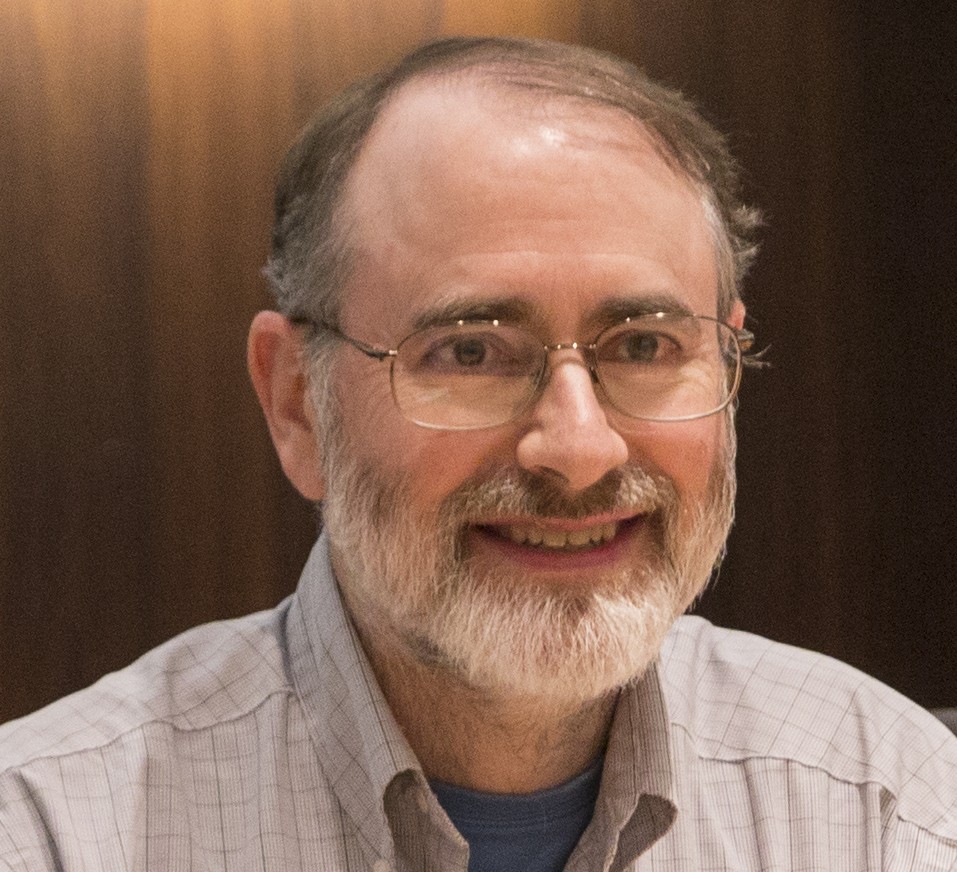 Speaker: Dr. Thomas Dietterich, Emeritus Professor, Oregon State University Speaker: Dr. Thomas Dietterich, Emeritus Professor, Oregon State UniversityTitle: Robust Autonomy: Some Pieces of the Puzzle Abstract: |
 Speaker: Dr. Tomas Krajnik, Associate professor, Czech Technical University in Prague Speaker: Dr. Tomas Krajnik, Associate professor, Czech Technical University in PragueTitle: Chronorobotics: Forecasting Environment Changes for Social Robots Abstract: |
Tentative Program Schedule (in Eastern Time)
|
8:20 -
8:30 |
Welcome
and Introduction |
|
|
Session 1: Knowledge Representation
and Verification (Chair: Bruno Lacerda) |
|
8:30 -
8:45 |
|
|
8:45 -
8:55 |
|
|
8:55 -
9:05 |
Knowledge-based Sequential Decision Making under Uncertainty: A Survey |
|
|
Session 2: Reinforcement
Learning (Chair: Connor Basich) |
|
9:05 -
9:20 |
PEBL: Pessimistic Ensembles for Offline Deep Reinforcement Learning |
|
9:20 -
9:35 |
|
|
9:35 -
9:50 |
Mission Planning in Unknown Environments as Bayesian Reinforcement Learning |
|
9:50 -
10:00 |
Promoting Resilience of Multi-Agent Reinforcement Learning via Confusion-Based Communication |
|
10:00 - 10:20 |
Break |
|
|
Session 3: Cyber-physical
Systems (Chair: Mohan Sridharan) |
|
10:20 -
10:35 |
Coyote: A Dataset of Challenging Scenarios in Visual Perception for Autonomous Vehicles |
|
10:35 -
10:50 |
Situation-Aware Task Planning for Robust AUV Explorations in Extreme Environments |
|
10:50 -
11:00 |
A Toolchain to Design, Execute, and Monitor Robots Behaviors |
|
11:00 - 11:50 |
|
|
11:50 - 12:00 |
Break |
|
|
Session 4: Invited Talks on Lessons Learned
from Deploying Systems in the Wild (Chair: Ron Petrick) |
|
12:00 -
12:15 |
"Deploying Autonomous Robots in Dynamic Spaces - From Retail to Warehousing". Andrei Danescu, BotsAndUs |
|
12:15 -
12:30 |
"Lessons from Cotton Farmers, Babies, and TB Patients: What the Global South has to say about robustness and reliability in AI".
Rahul Panicker, Vicarious AI |
|
12:30 -
12:45 |
"Employing Autonomous Science for Space Exploration". Kiri Wagstaff, NASA JPL |
|
12:45 -
13:00 |
"The NOC Experience: Real Life Lessons for the Design of Ocean Autonomous Systems". Alvaro Lorenzo
Lopez, National Oceanography Centre |
|
13:00 - 14:00 |
Break |
|
14:00 - 14:50 |
Keynote: Thomas Dietterich, Oregon
State University |
|
|
Session 5: Planning (Chair: Sandhya Saisubramanian) |
|
14:50 -
15:05 |
Mixed Observability MDPs for Shared Autonomy with Uncertain Human Behaviour |
|
15:05 -
15:20 |
Using Metareasoning to Maintain and Restore Safety for Reliably Autonomy |
|
15:20 -
15:35 |
|
|
15:35 -
15:50 |
Planning with Inconsistent Sensory Feedback: Knowing When to Act Blind |
|
15:50 |
Closing
Remarks |